New Paragraph
Robotics and Autonomous Vehicles: Five Questions Every Business Owner Should Be Asking
September 14, 2026
For privately owned U.S. businesses, 2026 is shaping up to be the year robotics moves from a technology curiosity to a practical management tool. Automation is no longer limited to large public corporations with massive facilities and technology budgets. Privately owned middle-market companies are beginning to use robotics and autonomous equipment to address labor shortages, improve safety, increase productivity, and support growth.
The most immediate opportunities are not necessarily humanoid robots or fully autonomous vehicles operating on public roads. They are practical technologies such as autonomous mobile robots, self-driving forklifts, robotic material-handling systems, AI-enabled inspection equipment, and autonomous vehicles used within controlled industrial environments.
Robotics-as-a-Service models are also making these technologies more accessible by reducing the need for a large upfront capital investment.
That does not mean every business should immediately invest in automation. The more important step is identifying where robotics could solve a specific operational problem and produce an acceptable return on investment. Start by asking these five questions.
1. Where Are You Struggling to Hire and Retain Employees?
Labor availability remains one of the most frequently cited reasons businesses invest in robotics. Companies are considering automation for positions that are difficult to fill, require frequent overtime, involve repetitive work, or prevent the business from increasing output without adding more employees.
Look across your organization and identify where labor scarcity creates the greatest constraint. You may have orders available but lack enough employees to fulfill them. Your experienced worker may spend too much time moving materials rather than completing skilled work. You may also have positions with consistently high turnover because the work is physically demanding or repetitive.
These labor challenges can point you toward practical automation opportunities. The goal should not be to automate simply because the technology exists. Instead, focus on areas where an ongoing staffing problem limits productivity, leads to excessive overtime, or prevents your skilled employees from concentrating on higher-value responsibilities.
This also changes how you evaluate the cost of automation. Rather than comparing a robotics proposal solely against current wages, consider the higher operational costs of vacancies, turnover, overtime, production delays, and missed growth opportunities.
2. Which Tasks Are Repetitive, Low-Skill, or Safety-Sensitive?
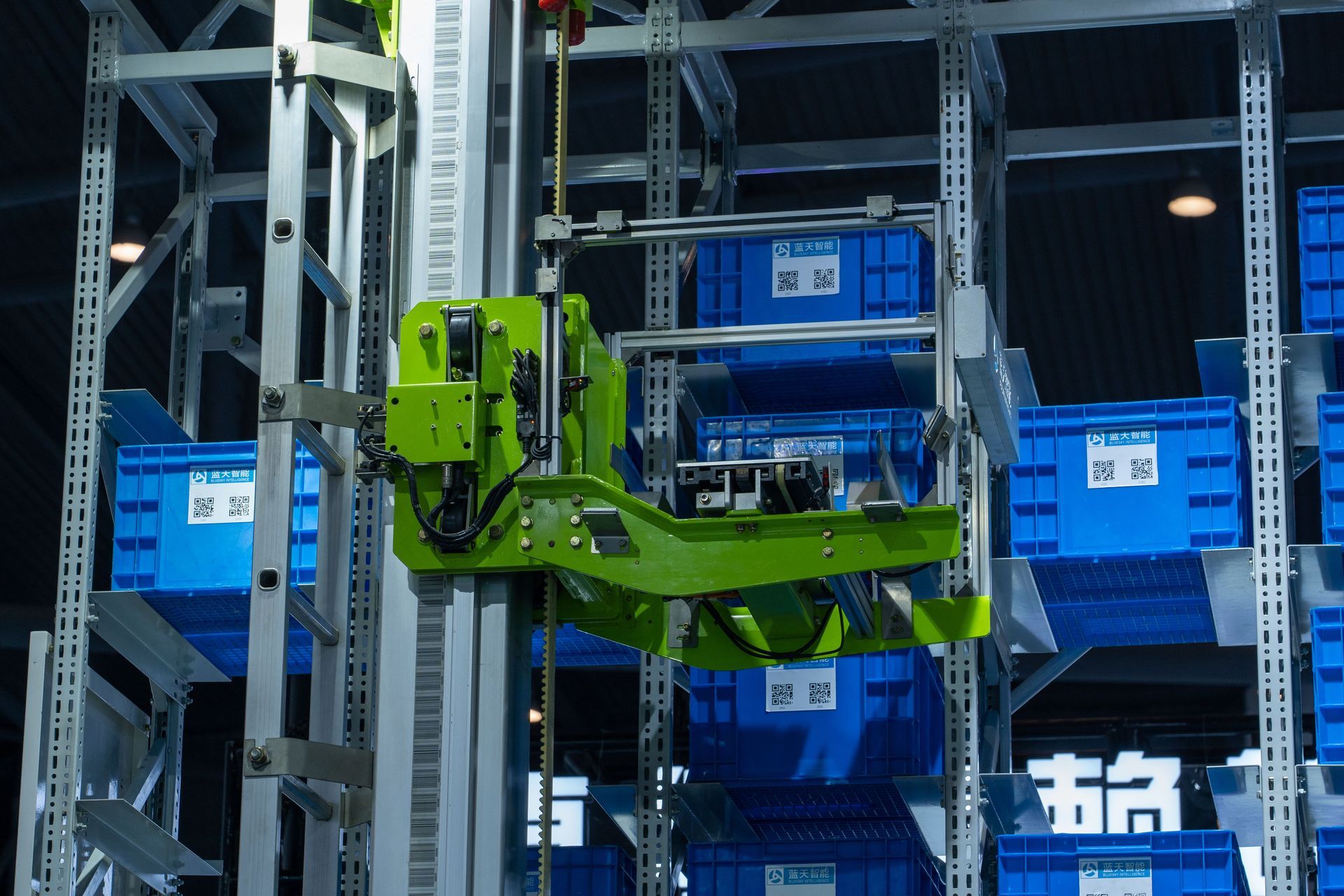
Some of the strongest potential returns on robotics come from tasks that are repetitive, relatively predictable, or likely to expose employees to avoidable safety risk. The briefing identifies applications such as warehouse picking, inventory replenishment, material movement, self-driving forklifts, inventory cycle counting, and quality inspection support.
Walk through your operation, focusing on tasks rather than job titles. Ask which activities employees repeat throughout the day, which assignments create avoidable physical strain, and which processes place people near heavy equipment or other hazards.
Warehouse and logistics operations currently present one of the strongest business cases. Reported benefits include faster order fulfillment, improved inventory accuracy, reduced dependence on labor, enhanced workplace safety, and greater scalability during seasonal peaks.
Safety deserves particular attention during this evaluation. Consider whether autonomous equipment could reduce employees' exposure to unsafe environments or lower the possibility of workplace injuries. That question can help you identify opportunities where automation supports both operational performance and employee well-being.
However, replacing a repetitive task with technology does not automatically improve the underlying process. Research cited in the briefing suggests that organizational change can be a greater barrier than the technology itself. Successful adopters typically redesign their processes instead of simply adding automation to an inefficient workflow.
3. Can Automation Increase Throughput Without Adding Headcount?
Growth does not always require a proportional increase in labor. Robotics can help privately owned businesses evaluate whether they can expand production, process more orders, or move materials more efficiently using their current workforce.
This question is particularly important if labor availability has become a ceiling on your growth. If customer demand increases, can your current processes support that demand? If not, which operational bottleneck would yield the highest return if automated?
Autonomous mobile robots are gaining attention because they can move inventory, transport materials, support picking operations, and operate within existing facilities with relatively limited infrastructure changes compared with traditional fixed automation. They may also be implemented incrementally instead of requiring a major, facility-wide capital project.
This incremental approach gives you an opportunity to begin with a focused operational problem. You can evaluate one process, establish the business objective, and determine whether the technology improves throughput, accuracy, safety, or labor utilization.
An effective automation strategy should help your employees accomplish more valuable work. For example, if a robotic system handles routine material movement, experienced employees may be able to spend more time on production, quality control, customer service, or process improvement.
4. What Subscription-Based Robotics Solutions Are Available in Your Industry
Traditional automation projects can require substantial capital, facility modifications, and long implementation cycles. Robotics-as-a-Service, commonly called RaaS, offers another path by providing robotics through a subscription-based model.
The briefing notes that leasing and as-a-service models have lowered barriers to entry for small and mid-sized companies. These options may allow businesses to explore automation without treating every implementation as a major capital project.
Ask whether vendors in your industry offer subscription, leasing, pilot, or phased-deployment options. Then evaluate whether those arrangements align with the problem you are trying to solve.
A lower upfront cost does not eliminate the need for careful analysis. You still need to consider cybersecurity, integration complexity, change management, workforce acceptance, capital requirements, and the possibility that the technology could become outdated.
You should also define what success will look like before beginning a pilot. Depending on the application, that might mean reducing overtime, improving inventory accuracy, increasing throughput, lowering safety exposure, or relieving pressure in a difficult-to-fill position. A clearly defined business objective will help you evaluate the technology based on operational results rather than novelty.
5. Are Your Competitors Beginning to Automate?
Robotics should also be part of your competitive planning. Early adopters may gain advantages in productivity and labor costs, especially if automation allows them to fulfill orders faster, operate more consistently, or grow without increasing labor at the same rate.
Consider what advantage a competitor could gain through successful automation. Could it shorten lead times? Improve order accuracy? Increase production capacity? Respond more effectively during seasonal demand? Reduce exposure to labor shortages?
You do not need to replicate every technology investment another company makes. You do need to understand whether automation is changing customer expectations or cost structure within your industry.
Autonomous vehicle technology illustrates the importance of separating practical opportunities from more speculative ones. Full deployment across general transportation remains constrained by regulatory, safety, insurance, and infrastructure challenges. For privately owned businesses, the more immediate possibilities include autonomous yard operations, industrial site transportation, last-mile logistics pilots, and self-driving agricultural equipment.
Humanoid robots offer another technology for monitoring, but not necessarily an immediate solution for every company. Early deployments are occurring in manufacturing and logistics, while broader adoption is still expected to take time. In the near term, experts cited in the briefing expect humanoid robots to supplement human workers rather than replace them.
Preparing Your Workforce for Increased Automation
The success of an automation initiative depends on more than purchasing equipment. Employees need to understand why the business is evaluating robotics, what problem the technology is intended to solve, and how their responsibilities may change.
Without clear communication, employees may interpret automation as a direct threat. Business owners should instead explain how a proposed system could reduce repetitive work, address unfilled positions, improve safety, or help the company remain competitive.
Employees' input can also strengthen the evaluation process. The people performing a task every day often understand its inefficiencies, expectations, and safety concerns better than anyone else. Involving them can help you identify where automation may be useful and where a proposed solution may create new complications.
The objective is not simply to install a robot. It is to redesign work so that your people and technology contribute where each provides the greatest value.
Turn Robotics Into a Management Conversation
Robotics and autonomous vehicles should no longer be treated only as technology topics. They are management topics involving labor, capacity, safety, capital allocation, process design, and competitive strategy.
Business owners do not need to predict exactly how quickly every form of robotics will develop. They should identify where labor scarcity limits the business, determine which operational process offers the strongest potential return, investigate Robotics-as-a-Service options, consider whether autonomous equipment could improve safety, and evaluate what competitors may gain through automation.
The companies best positioned to benefit will not necessarily be the ones that adopt the most technology. They will be the ones who connect automation to a clearly defined business problem, prepare their employees for the change, and evaluate results using practical operational goals.
For privately owned businesses, robotics is becoming less about imagining the distant future and more about deciding where the technology can create measurable value today.

Evaluate Automation Opportunities with The Alexander Group
At The Alexander Group, we help business owners take a proactive, strategic approach to evaluating emerging technologies, operational efficiency, and long-term growth opportunities.
We focus on helping you identify where automation, robotics, and process improvements can create meaningful value within your business, allowing you to improve productivity, enhance safety, and remain competitive in a rapidly evolving marketplace. Contact us today.